
Home / Services / Commercial and industrial
Commercial and industrial asbestos surveys in Stoke-on-Trent
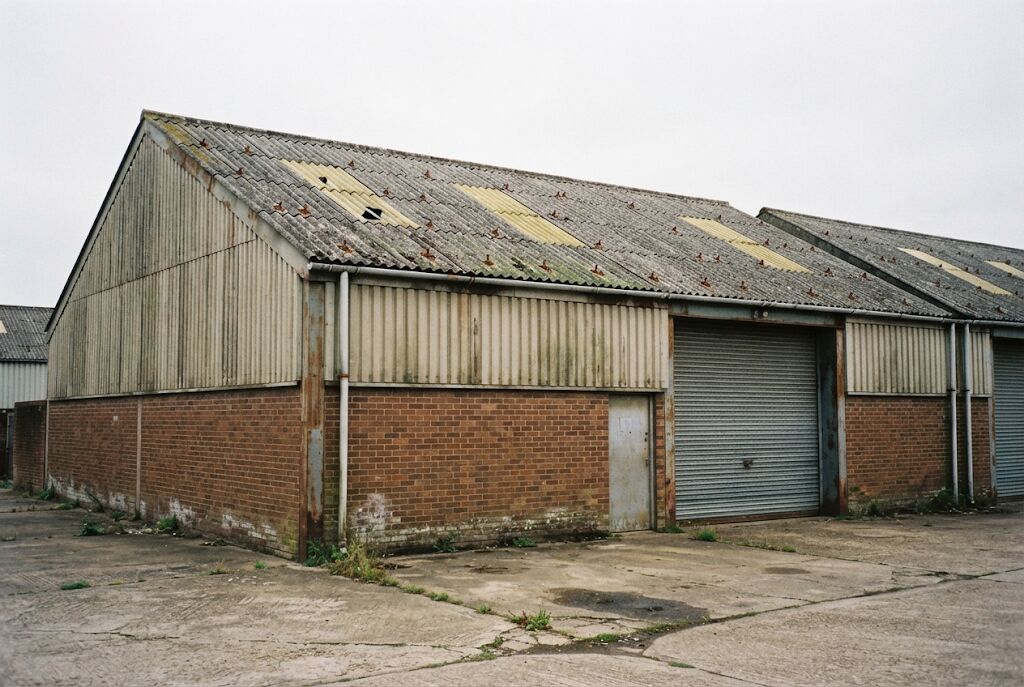
Industrial units, workshops and warehouses around Stoke-on-Trent often have cement sheet roofs, cladding and pipework from the era when asbestos products were common. A survey records them and sets out a plan.
What is typically found
Cement sheet roofs and wall cladding, rainwater goods, insulation board, pipe lagging, floor tiles, and fire protection boards. Buildings of this type that have been adapted over decades often hold several different materials in different places.
Duty to manage
Owners and those with responsibility for maintenance of non-domestic premises must find out whether asbestos is present, assess its condition and manage the risk. For a unit or a multi-unit estate, a management survey plus a register is the standard way to do this.
Before changes of use or demolition
If a unit is being fitted out, converted or demolished, a refurbishment and demolition survey is needed for the areas affected. Plan this early so that any removal can be done without delaying the project.
Who does the work, and what the law expects
Kilnbrook Asbestos Surveys is an introduction service. We pass your details to an independent contractor, who provides the quote, takes the samples or carries out the survey, and holds the insurance and any competence they need. Samples are analysed by a laboratory and the result is issued in writing. Taking samples or surveying a building is work with real exposure risk, so it should be done by trained people with dust controls, and the sample should be bagged, sealed and labelled correctly.
What to send us
- Two or three clear photos of the material and where it is
- The room, roof or area, and roughly how much of it
- The age of the building if you know it
- What work is planned, and when, if any
- Whether the building is occupied or in use
Prices on this site are guides only. Only the contractor's written quote counts.
How it works.
- 1
Tell us about the building
Send the address area, what it is used for, its age and what you need the survey for.
- 2
Scope and quote
A local contractor reviews it and sets out in writing what kind of survey fits and what it covers.
- 3
Site visit
A surveyor inspects the building, takes samples where needed and records what they find.
- 4
Report
You receive a written report, usually with a register of the materials and their condition.
What affects the price.
- Floor area, height and number of units
- Type of construction and roof
- Whether the building is occupied
- Access to roof and voids
- Whether the survey is for management or for work
Good to know.
We are a tenant. Whose duty is it?
It depends on your lease and who is responsible for repair and maintenance. Check the lease and ask the landlord for any existing survey.
Can a large roof be sampled safely?
Yes, with proper access. Samples are taken from edges or hidden spots.
Do old potteries need a survey?
Older industrial buildings often hold several materials, so a survey is usually the practical route.
Will a survey stop our operations?
Usually not, but some areas may need to be empty for part of the visit.
Do you do the testing yourselves?
No. We are an introduction service. We pass your details and photos to an independent local contractor, who provides the quote, takes the samples and arranges the laboratory analysis.
What should I send?
Two or three clear photos, what the material is and where it is, the age of the building if you know it, and a postcode. A phone photo is fine.
Can I take a sample myself?
It is not recommended. Cutting, scraping or drilling can release fibres. Leave the material alone and have a trained person take the sample.
Where we cover.
Stoke-on-Trent, its neighbourhoods and the towns and villages around it.
Tell us what needs testing.
A local contractor reviews your details and photos, then replies with a written quote for sampling or a survey. Free to ask, no obligation.
Prefer to talk?
01782 000 000